Showing posts with label storytelling. Show all posts

Tuesday, September 5, 2023

Free Bible Story Download: Psalm 139

Do the kids in your ministry ever feel anxious when going to new places and facing new challenges? Of course they do! That’s totally normal for kids AND adults. 

One thing we can do to help our kids with this kind of anxiety, however, is to teach them early on that God is with them everywhere they go.  When kids discover the big God who created the universe, is also “an ever present help in trouble” (Psalm 46:1, NIV), it changes everything!

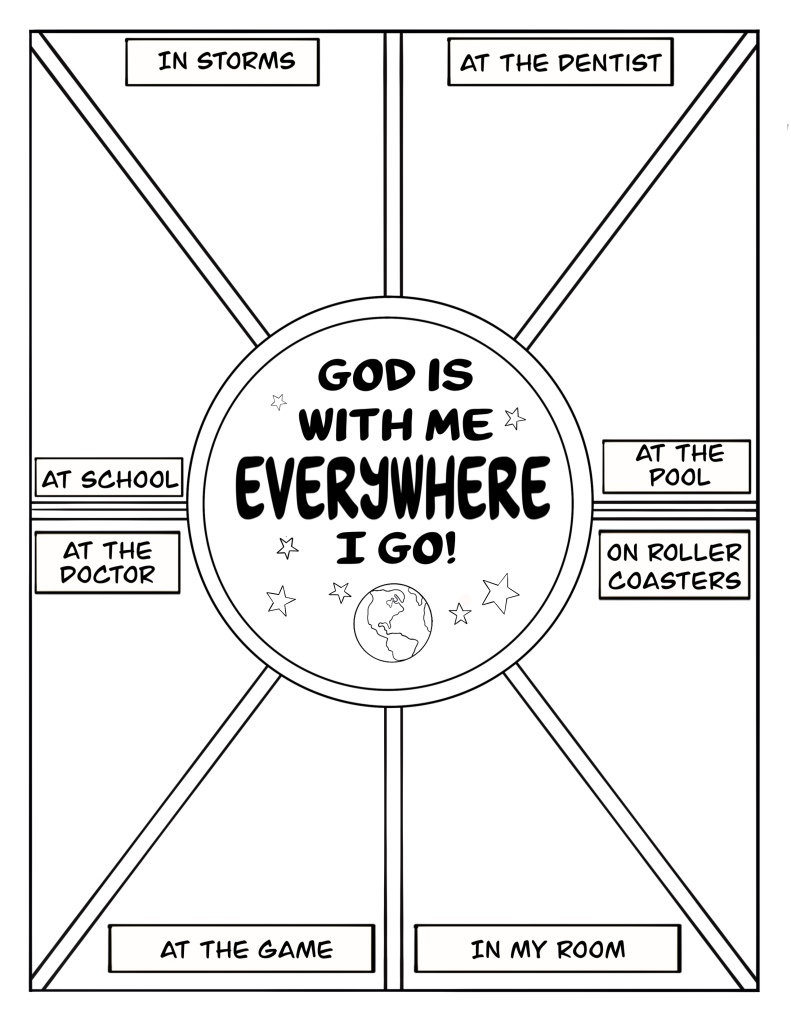
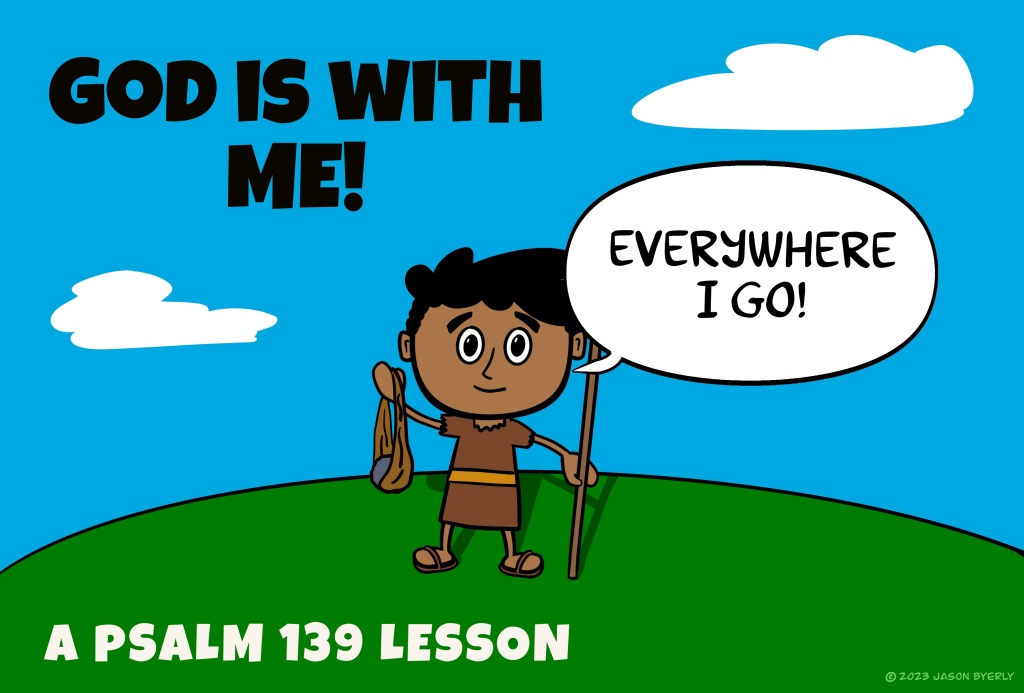
That’s why I’ve written this free large group/small group lesson to help kids understand that God is always with them. It’s based on the same Scripture as my first picture book, Where’s God? A Psalm 139 Story. This lesson can be used in conjunction with Where’s God? or as a stand alone resource that works on its own.

Here’s what you get in your free download:

Large Group Lesson

  • Opening Game with digital game graphics.
  • Creative Bible Lesson – Psalm 139 (life of David overview).
  • Application and Lesson Wrap Up with Bible verse and Big Idea slides.

Small Group Lesson

  • Ice breaker game with printable game cards.
  • Discussion activity with printable activity sheets.
  • Memory verse activity.

Family Devotion

The lesson also includes a short family devotion you can share with parents to help them keep the conversation going at home.

Teaching Tips

The large group lesson is told by a storyteller and a story helper/actor playing David. Depending on your resources, you can have the actor memorize their David lines or have another story helper hold up cue cards for the actor. Check out this post on team teaching for some helpful tips.

In case you missed the link above, you can download the lesson here. This will take you to a quickstart page with the links to the lesson docs, slide graphics and printables. I’d love to hear what you think, and let me know how it goes with your kids!

For more teaching tips and free resources, sign up here for the Bible Story Coach Newsletter to learn the skills you need to bring the Bible to life for kids.

The hardcover of Where’s God? is also available on BarnesandNoble.com.

Wednesday, April 26, 2023

End Your Bible Story with a Big Reveal

We all want our kids to remember the Bible stories we teach.  We want them to leave church talking about it.  We want them excited to come back for more.  

One effective way to achieve this is to build in the occasional surprise ending to our stories, or what I call “the big reveal.”  These aren’t surprises just for the sake of changing things up (though that’s not a bad thing), but the big reveal is a way to emphasize the main biblical truth we’re trying to communicate in an unexpected way.  

One of the easiest ways to do this is by using props to hide your message in plain sight.

Nehemiah

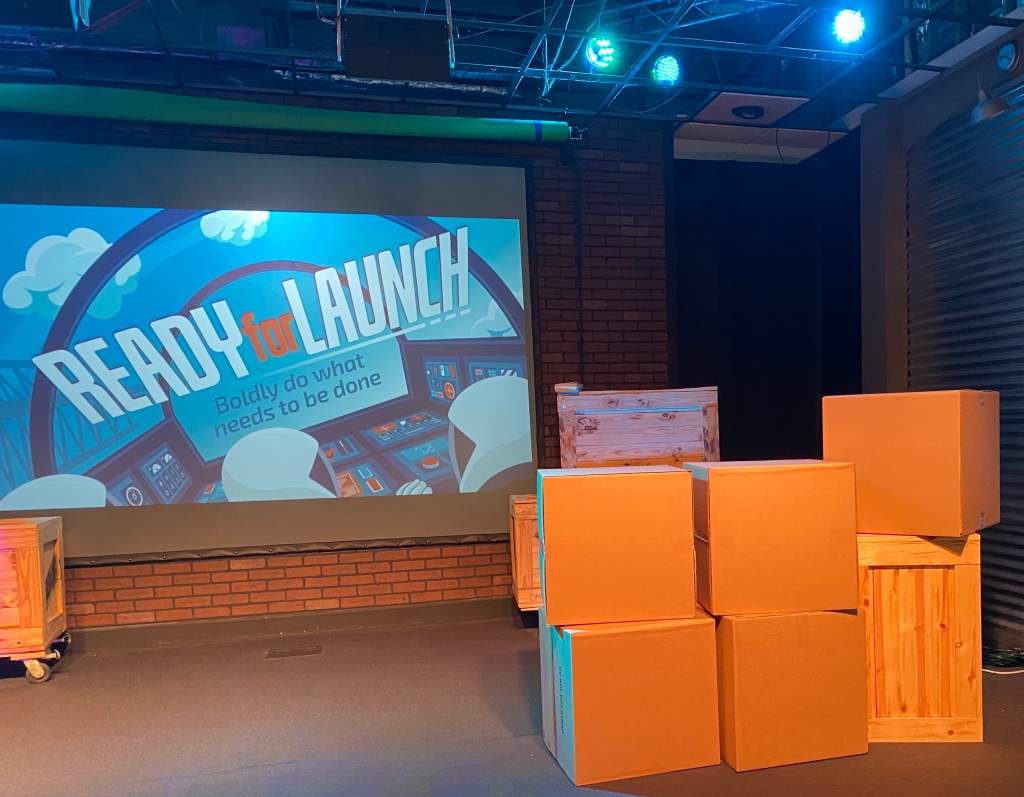
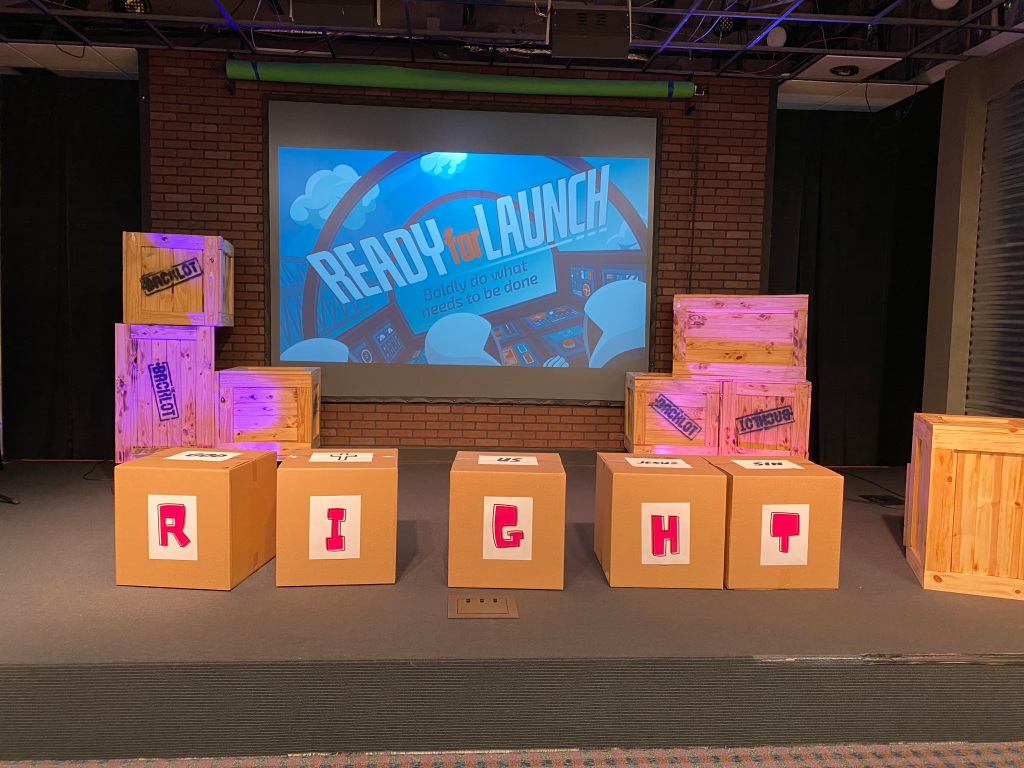
A few years ago, I taught a lesson on Nehemiah that was all about how Nehemiah chose to do the right thing even when it was really tough.  When the kids walked in, I had large cardboard boxes sitting around the teaching area that I used to represent the rubble of the wall of Jerusalem.

In the application time at the end of the story, we talked about different challenges the kids might face this week. As we walked through each situation, I picked up a box from the rubble and added it to a row of boxes at the edge of our stage, having them repeat the phrase, “It’s worth the fight to do what’s right” in response.

At the very end I flipped the boxes, revealing the letters R-I-G-H-T printed on the bottom as I reminded them that God will help us to do what’s right even when it seems impossible. 

The kids went nuts when they realized the message had been hidden in front of them all along.  

John 3:16

We also use this in our teaching about salvation and baptism.  I adapted this from an old Willow Creek Promiseland lesson from over twenty years ago, but it’s such a good idea we use again and again.  

For this lesson, we use signs with the following symbols to explain what Jesus did for us and how we can respond.  

  • Cloud: God is perfect.
  • Heart: He loves me.   
  • Earth: Sin is the problem.
  • Gift: God wants to give me a gift.
  • Cross: Jesus paid for my sin. 
  • ABC: To receive God’s gift, we Admit our need for Jesus, Believe in Jesus and Choose Jesus to be our Forever Friend 

We talk about each one of these concepts for a few minutes, but at the end, the storyteller reveals that these pictures remind them of one of their favorite Bible verses, John 3:16.  The storyteller then goes from sign to sign saying the verse and pointing to the corresponding picture.  

  • Cloud: For God
  • Heart: So loved
  • Earth: the world
  • Gift: that He gave
  • Cross: His only Son
  • ABC: so that anyone who believes in him will not perish but have eternal life.

Of course all of this was visible the whole time, but it’s a fun aha moment when we get to point it out.  It’s especially fun because we do this lesson with parents in the room, who are more likely to already know the verse and appreciate the surprise.

So your challenge this week is to take this same principle and try it out in an upcoming story.  Look for ways you can occasionally use props in your storytelling that can also reveal a surprise word, Bible verse or phrase at the end that will drive home your teaching.

Here are three keys to make it work:

  1. Make the message intentional. Whatever word, phrase, verse or picture you use, it should be the payoff for the lesson, not just a random add on at the end.
  2. Hide the message in plain sight. Whatever you use to conceal the message needs to make sense with the lesson (like my John 3:16 pictures and Nehemiah boxes).  Sure you could hide the message in random set dressing or room decor, but it’s way more fun if the props seem to have a purpose. 
  3. Practice with the props several times, This will help you reveal the message smoothly and keep you from fumbling the big moment.  When I did the Nehemiah lesson, I had to be extra careful to get the boxes in the right order and to make sure none of my letters were upside down.  Without practice it would have been so easy for me to blow it.

Of course you can’t use a big reveal every week or the kids will be on to you, but when you do use, it will remind kids that God’s Word is full of fun surprise. More importantly, it will help to remember the truth you’re teaching for weeks and months to come.

In our next post we’ll talk about another fun way to end with a big reveal: using simple pictures to lead up to powerful finish!

Friday, December 3, 2021

Rediscovering Your Christmas Wonder


The room was silent, all the kids’ eyes glued to the gifted storyteller onstage. With expert skill she told the tale of the wise men coming to see Jesus. She said, “Evil King Herod told the wise men to let him know when they’d found the child so he could go and worship Jesus too. But he was lying! He didn’t really want to worship Jesus. He wanted to hurt him!”

Suddenly a first grader gasped and cried out, “WHAT?!”

It was awesome. This was obviously the first time this kid had ever heard the Christmas story, or at least that part of it. He was totally shocked that anyone would ever think about harming Jesus. This was completely new information.

I think of that day every year when I’m preparing to teach for Christmas. It’s a great reminder that I will have kids in the room who will be hearing this incredible story for the very first time. 

That means I have to bring my A-game. I can’t let myself become lazy or bored just because I’ve heard the Christmas story a million times.  I can’t just go through the motions. I have to be fully engaged with the wonder of what God did in Bethlehem.  

As adults it’s easy to lose our sense of awe for the familiar. Many of us have talked about Mary, Joseph and the shepherds so many times, we may begin to see them more as cartoon characters instead of real, breathing humans who experienced the miraculous.  

Think about it. These people were swept up in a cosmic drama, where the entire fate of mankind hung in the balance. They talked with angels. Angels! Not cute, little cherub babies but terrifying beings of unimaginable power. 

And let’s not forget the mind-blowing mystery in the manger. God in the flesh! The Creator King wrapped in swaddling clothes, breathing the air He made, submitting to the gravity He invented, all-powerful but fragile, eternal but newborn, the Author of Life destined for a cross.

How could we tell this story with anything less than jaw-dropping, eye-popping amazement?  

Yet, we do, because we’re human and we’re jaded and we’re busy and stressed with daily life, and we just forget. We forget what it’s like to be a seven-year-old hearing this world-changing true story for the very first time.  

So, if that’s you this year, here are a few ideas to reclaim your wonder and bring your best to the Christmas story:

  1. Pray. Ask God to restore your sense of awe. Repent of any cynicism in your heart. Seek forgiveness for forgetting what He has done. Trust me, I’m right there with you. 
  2. Read the story. I’m embarrassed to admit how many times I’ve taught lessons from a curriculum or from memory without going back and re-reading the text. Read the Christmas story from the Bible! Read in multiple translations. Read it  . . . slowly . . . and think about it.
  3. Step into history. Imagine what it would have been like to be Mary or Joseph or a shepherd. Explore your senses. What would you see, hear, taste, touch and smell throughout these events? Plug into it emotionally. How would you feel if you were in Mary’s shoes when the angel shows up? Imagine being Joseph and hearing Mary’s preposterous news. Use your imagination to engage with this story as if it’s happening today.
  4. Look for creative inspiration. Check out shows like Christmas with the Chosen or a book like Max Lucado’s Cosmic Christmas. Listen to powerful Christmas music and take time to let it sink into your heart. 
  5. Reflect on what the coming of Christ has meant to you. Journal about it. Pray about it. What difference has “God with us” made in your life? Think of where you would be without Jesus.

Take some time this season to grow young again for Christmas. Invite the God who became a baby to blow your mind with the miracle of His love and His presence, and let your child-like worship overflow to all those you teach and lead each day. 

Friday, November 15, 2019

Free Bible Story Download: Jehoshaphat vs the Big Bad Army

When King Jehoshaphat learns three enemy armies have teamed up against him, he knows he and the people of Judah don’t stand a chance.  Their only hope is for God to swoop in and save the day.  
In this interactive retelling of the classic Bible story from 2 Chronicles 20, kids will discover that God is bigger than all our fears.  When we choose to worship instead of worry, we see just how big God really is.  
Jehoshaphat vs the Big Bad Army includes a full story script, pre-story game and all the graphics you will need to bring the Bible to life for your kids.  You can download this free creative teaching when you sign up for Bible Story Coach newsletter.  

Sunday, September 29, 2019

Bringing the Bible to Life for Kids

God's story is the best story ever. That's means it requires our best as storytellers to bring it to life for our kids. The good news is this is easier than it sounds.

Whether you're a Sunday School teacher with eight children in your room or a large group storyteller communicating to hundreds of kids from a stage, the principles of effective storytelling are the same.  You have to be intentional with what you say and how you say it. It's a combination of both content and presentation.

Here are three episodes of the Simple Kidmin Podcast that will help you with both. Episodes 18 & 20 focus on presentation skills, while Episode 22 is a mixture of both content and presentation tips.

Check these out and try some of the techniques with your kids. You'll be amazed at how just a few tweaks can make a huge difference when you're bringing God's story to life.

If you'd like more storytelling help, you can read my free ebook, Anatomy of a Perfect Bible Lesson, available here.


Storytelling Part 1: Voice

Listen here on the blog or in iTunes.


Storytelling Part 2: Face & Body

Listen here on the blog or in iTunes.


Storytelling Part 3: 12 Tips for Success

Listen here on the blog or in iTunes.

Saturday, March 2, 2019

Episode 18: Storyteller Training Part 1 (Using Your Voice)


This is the first of a three-part series focused on training for Children's Ministry storytellers and large group teachers.  

Today we will look at the worst advice ever given to storytellers and several ways storytellers can use their voices to bring the Bible to life.


Check it out in iTunes or in player below.


Thursday, September 22, 2016

D6 Breakouts: Digital Storytelling for Today's Kids


D6 Breakout Notes:

Digital Storytelling for Today’s Kids, Matt Guevara

Matt Guevara is a veteran children's and family ministry leader, the author of 11 Ways to Share the Gospel with Digital Natives and is the Executive Director of INCM. In this breakout Matt explores storytelling principles and tools we can leverage to powerfully share God's Word in the ways kids naturally learn.

We are wired for story.  Story is part of God’s imprint upon us.  Story is how He revealed Himself to you and me.

Why does today’s generation need a different type of storytelling?  They are different than you and me. Their brains are fundamentally different in the way they adopt and receive information.

We need to adapt and adjust how we story-tell to make learning fun and more relevant to their world.  

We need to teach less step-by-step and lean into more story.

There’s a profound difference between a story and a report.  A report is a list of things that happen in a linear sequence.  A story is sharing the highs and lows of a character, so much movement and depth to a story.

Monday, February 13, 2012

Essentials vs. Bells and Whistles

I don't know about you, but I'm easily distracted by bright, shiny objects.  I walk into Wal-Mart to get cat food and the next thing I know I'm looking at home theater systems.  I don't have the money to buy one, and I certainly don't need it, but there I am anyway.   Meanwhile, the family cat is at home calling animal protection because he's starving.

Sometimes I see the same tendencies in Children's Ministry.  It's easy to get wrapped up in the stuff that doesn't matter at the expense of what brought us there in the first place.

When putting together a creative program for kids, you have to be able to distinguish between essentials and bells and whistles.  Some of the most effective storytelling I’ve ever seen has been low tech and simple.  Some of the worst programs I've ever seen have been loaded with smoke and mirrors.  Unfortunately that's all they were.

Sunday, February 12, 2012

Four Simple Ways to Spice Up Your Teaching Space, Part 4 - Audience Plants

Just to put you at ease, this is not a post about filling your Children's Ministry with ferns.  No, I'm talking about planting storytellers, actors or other programming volunteers in the audience with your kids.

For the past several posts we've talked about ways you can shake things up during your teaching times by making creative use of your space.  We've already looked at teaching stations, runways and teaching in the round as ways to reconfigure a traditional audience/stage room set up.  If you have a more traditional Sunday School table and chairs set up, check out this post on how you can create some basic storytelling space.

Standard Set Up

Unlike the other options we've covered, audience plants give you the same outside the box storytelling effect without having to change anything about your room set up. 

Wednesday, February 8, 2012

Four Simple Ways to Spice Up Your Teaching Space, Part 3 - Runways

For the last couple of posts we've been talking about how you can take a typical stage/audience set up in your children's space and make it a little more interesting. 


Standard Set Up
One of the challenges of a typical auditorium or theater style set up is that the kids can feel separated from the action on the stage.  So far we've talked about how you can overcome that by using teaching stations and teaching in the round.

Today, we're going to jump into a variation of teaching in the round that I call runways.  A runway is simply a strip of teaching space that extends into the middle of the audience. 

Tuesday, February 7, 2012

Four Simple Ways to Spice Up Your Teaching Space, Part 2 - Teaching In the Round

In the last post we talked about some simple ways you can take a traditional stage/audience set up in a children's space and switch it up to bring some excitement to the room. 


Standard Stage Design

One way you can do this is by teaching in the round.  Teaching in the round simply means that you create a teaching space in the middle of your kids. 

Saturday, February 4, 2012

Four Simple Ways to Spice Up Your Teaching Space, Part 1 - Teaching Stations

I don't know if variety really is the spice of life (personally I prefer oregano) but variety sure can spice up your large group storytelling experience for kids.  In Children's Ministry we have a tendency to keep doing what works and sometimes miss out on new techniques that may actually work better than our old comfortable routine.

Unless you're using a traditional classroom set up (kids sitting in chairs around tables), your Children's Ministry probably looks like an auditorium - a stage or teaching area up front and kids sitting in rows like they're in a movie theater.     

Standard Stage Set Up


Nothing wrong with this.  In fact it usually works pretty well.  But like anything in our ministries, this set up can grow predictable and stale.  If you want to try something fun, shake it up one weekend (and blow your kids' minds) by trying an alternate configuration.

Friday, February 3, 2012

Simple Storytelling Space

If you really want to captivate kids with the Bible, you need to create a focused storytelling space.  This can be as simple or as elaborate as your facility and resources allow.  Your goal is to create a focal point in the room, free of distraction, that helps the kids zero in on the communicator and the message. 

Think of it as telling a story around a campfire.  The reason this has been so effective over the centuries is that people are naturally drawn to the warmth and light of the fire in the dark.  The glow of the flames creates a magical atmosphere that primes the pump for our imaginations and makes us putty in the hands of the storyteller standing at the fire's edge. 

You see the same principle at work on professional stages used for plays or concerts.  A movie theater isn't that much different. 

So the question is, given whatever space you have to work with, how can you create a "campfire" experience that captivates a kid's attention and sets your storyteller up to win? 

If you're starting with a big, empty room, this is easy.  Just create a storytelling area in a corner or against one wall and gather kids around it on the floor.  Here are a few things to consider to make your space as intentional as possible:

1.  Make sure the wall behind your storyteller is either totally blank or purposeful.  The last thing you want is clutter or competing visuals to distract their attention.  There are all kinds of ways to spice this up (cool signs or graphics to establish your theme, series-based decor, screens, etc) but for now let's think simple.  Keep the wall clean.

2.  Make sure your storyteller has a  clear "stage" area even if you don't actually have a stage.   Clear out toys, furniture, etc. so that your communicator has room to move and tell the story.  The last thing you want is to have them tripping over stuff or kids while they're trying to mesmerize the audience. 

3.  Decide on the best seating option for you kids.  Use chairs or benches with caution.  They can become their own distraction.  If you put kids on the floor, though, make sure you have a way to define their space with area rugs or even theatrical gaff tape.  Kids need a boundary to know where to sit.  Also make sure kids know that you expect them to sit up and engage and not lay down or roll around on the floor. 

4. Add bells and whistles as needed, as you can afford and with caution.  By bells and whistles I mean a sound system, a stage, professional lighting and themed decor.  All of these are great and in some cases desperately needed so the storyteller can be seen and heard, but in smaller environments they can get in the way if not done well.  Bells and whistles are no substitute for solid, simple storytelling by a skilled communicator.

So what if you're not starting with an empty room?  What if you're locked into (or prefer) traditional classrooms?  You can still clear some furniture and create an effective "campfire" area on one side or in a corner of the room.  Consider something like this:


If you don't have room for this in your classrooms, could you find one room and turn it into your story room or large group programming space?  Could you bring kids in either in shifts or altogether for one phenomenal story (and possibly even worship time) then send them back to their individual rooms to unpack the lesson?

For those of you using a large group / small group model like this already, ask yourself how you can enhance and focus your teaching space.  For those in a traditional classroom, ask what you can do to shake things up to create a storytelling experience that rocks.

Whatever your situation, just ask yourself,  "How can I create a focused, intentional space that makes it easy for my storytellers to bring the Bible to life for kids?"  You may not be able to do it all overnight, but what is one simple step you can take today?